What a Seed Round Really Costs You
Dilution is only the headline. The real price of a seed round is the board seat, the pace you commit to, and the exit outcomes you quietly rule out.

Everyone quotes the same number: a seed round costs you about twenty percent of the company. That number is accurate and almost irrelevant. Dilution is the cheapest thing you give up.
The pool shuffle
The first hidden cost shows up in the term sheet as one line: a new option pool, sized at 10 to 20 percent, created pre-money. It sounds procedural. It is a price cut.
A pre-money pool is carved out of the existing shareholders — you — before the investor's money is counted. On a $3M pre, $1M raise, with a 15 percent pre-money pool, your effective valuation is closer to $2.55M. The headline number stays flattering and you pay the difference. Negotiate the pool size down to what your actual next-twelve-months hiring plan requires, and bring the plan to the meeting.
Liquidation preference sets the floor you have to clear
A 1x non-participating preference means investors get their money back before common stock sees a dollar, or they convert and take their percentage — whichever is better for them. That is standard and fine.
What it means practically: if you raise $2M and sell the company for $2M, the founders get nothing. Every dollar you raise raises the bar your exit must clear before your own shares are worth anything. Raising more money does not just dilute you; it moves the finish line.
Watch for participating preferred ("double dip"), preferences above 1x, and cumulative dividends. Each of them quietly reprices every outcome except the enormous one.
The board seat changes how decisions get made
Most priced seeds come with a board seat. You now have a formal body that approves budgets, option grants, new financings, and a sale. You have to prepare materials. You have to explain a bad month.
Good investors make this the best part of the round. But the structural fact is permanent: you have moved from "I decide" to "I persuade." Founders who never internalise that spend years frustrated by a process they agreed to in writing.
You have committed to a shape of company
This is the cost nobody writes into the documents. Venture money is priced for a specific outcome — a fund needs a handful of companies returning the entire fund. A $40M acquisition that would change your life is a rounding error in their model, and the people who need to approve it are the ones who own the preference.
So the round quietly removes options:
- Slow, profitable, lifestyle-scale growth stops being acceptable.
- A modest acquisition offer becomes hard to accept and harder to get approved.
- Not raising the next round becomes a crisis rather than a choice, because the burn you took on assumes it.
How to price all of this before you sign
Ask three questions in the room:
- What does the next round look like? If you cannot describe the metrics that make a Series A obvious, you are raising into a gap.
- What happens if we grow well but not venture-well? Listen carefully. The answer tells you what kind of partner you have.
- What are you actually buying? Money is commodity. Ask what they do in month three when a key hire quits.
A seed round is not free money with a percentage attached. It is a contract to attempt a specific, aggressive outcome, backed by governance that makes the attempt binding. Signed with clear eyes it is the best accelerant in business. Signed for the headline valuation, it is the most expensive thing on your cap table.
Common questions
- How much dilution is normal at seed?
- Roughly 15 to 25 percent for a priced seed round, plus whatever option pool the investor asks you to create before the money lands.
- What is a pre-money option pool?
- An option pool created before the investment closes, which means existing shareholders — the founders — absorb the whole dilution rather than sharing it with the new investor.
- Can you raise a seed and still sell the company small?
- It gets harder. Preferences and investor return expectations make a modest acquisition unattractive to the people whose approval you now need.
Keep reading
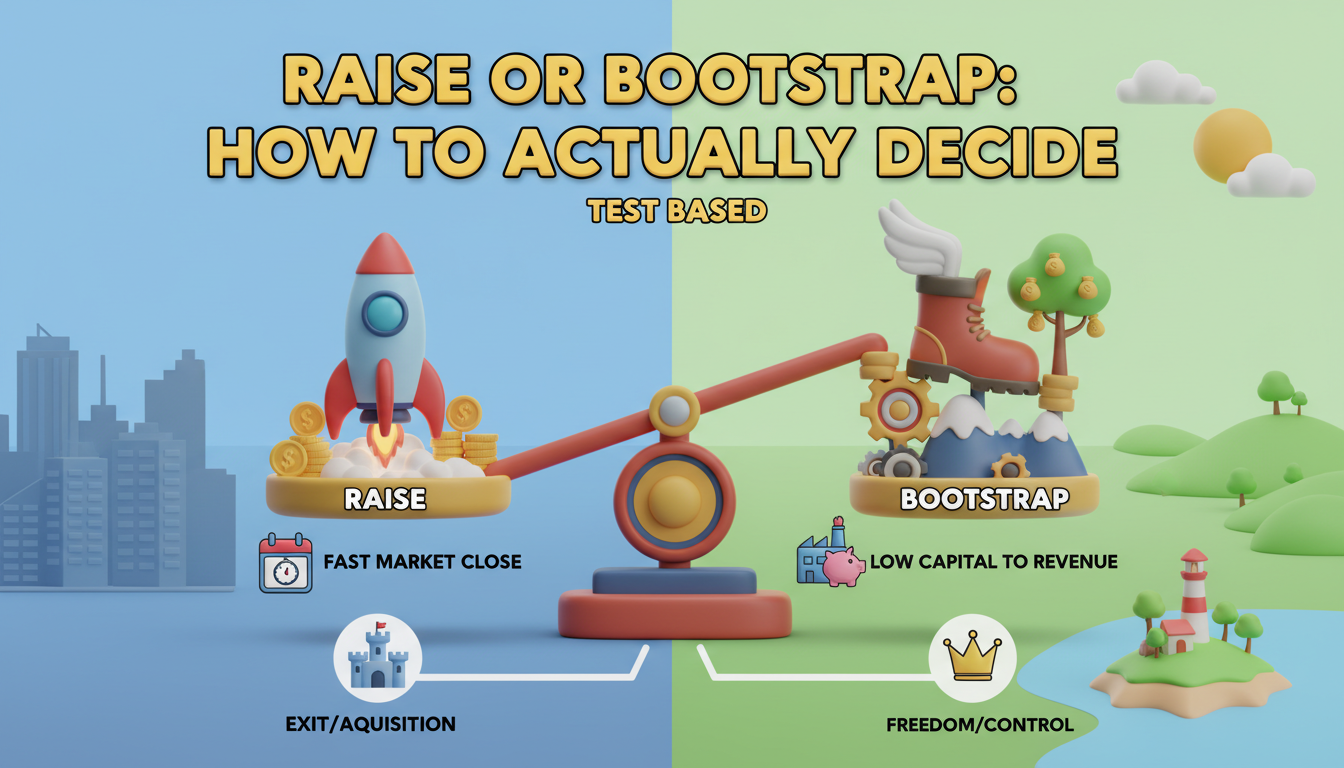
Raise or Bootstrap: How to Actually Decide
Not a philosophy question. A test based on how fast your market closes, how much capital your product needs before revenue, and what outcome you actually want.